
Non-Running Vehicle Transport
Non-Running Vehicle Transport — Safe Shipping for Inoperable Cars
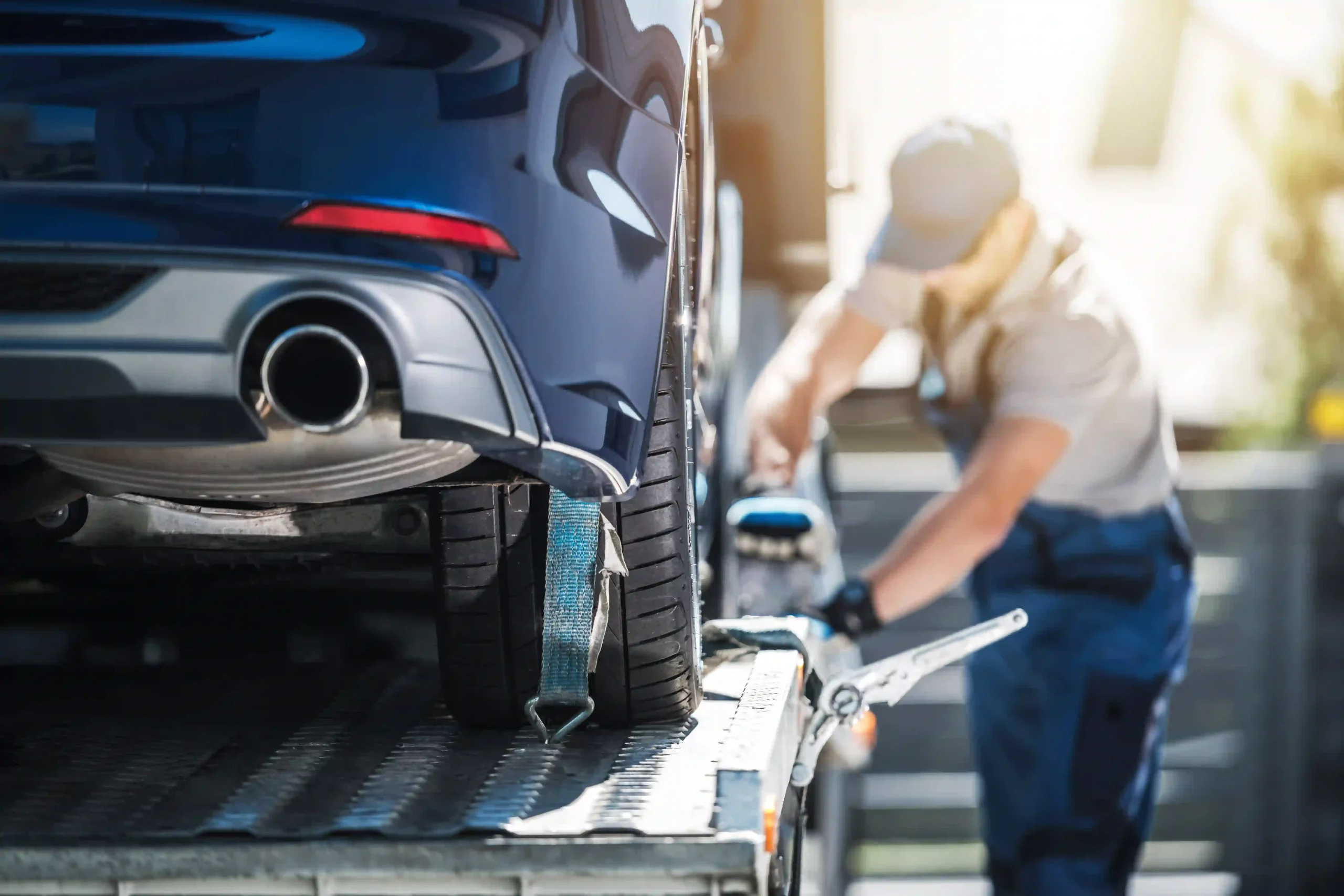
Need to ship a car that won’t start, roll, or steer? Non-running vehicle transport is one of our specialties. Whether it’s a project car, a salvage or wrecked vehicle, a blown engine, or a barn find, we move inoperable vehicles safely with winch-equipped carriers — fully licensed, fully insured, and priced honestly with no surprises.
Below you’ll find how non-running vehicle transport works, what it costs, how to prepare your vehicle, and answers to the most common questions.
What Non-Running Vehicle Transport Costs
Shipping an inoperable car costs the same base rate as a running one, plus a loading surcharge of $150–$600 depending on how mobile the vehicle is. A car that rolls, steers and brakes winches on in minutes. One that’s seized or missing wheels needs a forklift and two extra sets of hands — that’s what you’re paying for.
- Rolls, steers & brakes: +$150–$250
- Rolls only (no steering or brakes): +$250–$400
- Completely immobile (seized, no wheels): +$350–$600
Base open-transport rates run roughly $700–$1,000 for short regional moves, $1,000–$1,450 for mid-distance, and $1,300–$2,000 coast-to-coast. Tell us the real condition and your quote is locked at booking.
How Vehicle Condition Affects Loading & Price
| Vehicle Condition | Rolls / Steers / Brakes? | Loading Method | Typical Added Cost |
|---|---|---|---|
| Won’t start, but rolls, steers & brakes | Yes | Winched onto carrier | +$100–$200 |
| Rolls, but no brakes or won’t steer | Partial | Winch + extra labor | +$200–$350 |
| Completely immobile (seized, no wheels) | No | Forklift / special equipment | +$300–$600 |
Table of Contents
How Non-Running Vehicle Transport Works
Shipping an inoperable car isn’t complicated when it’s done right. Here’s how we handle it, step by step.
Tell Us the Real Condition
The most important step. Let us know whether the vehicle rolls, steers, and brakes so we dispatch a carrier with the right equipment (winch, liftgate, or forklift).
We Match a Winch-Equipped Carrier
Not every carrier can take a non-running vehicle. We assign one specifically equipped and experienced with inoperable loads, and verify their insurance.
Careful Winch Loading
Instead of driving on, your vehicle is slowly and safely winched onto the trailer and secured with heavy-duty tie-downs — no strain on the drivetrain.
Secure, Insured Transport
Your car is transported on an open or enclosed carrier with full cargo insurance and a signed condition report at both ends.
Careful Unloading & Delivery
At delivery, the vehicle is winched off just as carefully, inspected against pickup photos, and handed over.Non-Running Vehicle Transport Pricing Examples
| Scenario | Vehicle | Route | Loading | Added for Non-Running |
|---|---|---|---|---|
| Restoration Project | 1968 Mustang (no engine) | Texas → Ohio (~1,200 mi) | Winch, rolls & steers | +$200 |
| Salvage Auction Buy | Wrecked Honda Civic | Copart GA → New York (~900 mi) | Winch | +$250 |
| Blown Transmission | Ford F-150 | California → Texas (~1,400 mi) | Winch, open carrier | +$225 |
| Barn Find Classic | Flat tires, won’t roll | Illinois → Florida (~1,300 mi) | Forklift load | +$450 |


What’s Included With Every Non-Running Shipment
✅ What You Always Get (Included Every Time)
- Winch-equipped carrier — matched to your vehicle’s condition
- Licensed carrier — USDOT/MC numbers verified
- Insurance coverage — full cargo insurance on every shipment
- Vehicle inspection — pre- and post-transport condition reports
- Secure transport — heavy-duty tie-downs and careful loading
- Transparent pricing — no hidden fees, price locked at booking
What We Need From You
- Honest condition details (does it roll, steer, and brake?)
- Keys, if available
- Tires inflated and wheels on, if possible
- Any loose parts secured or removed
- A heads-up on fluid leaks or hazards
- Lot or pickup details for auction vehicles
The Bottom Line: The single biggest factor in your price is mobility. A car that rolls, steers, and brakes loads quickly and costs the least. The less it can do, the more equipment it takes — but we can move it either way.
Why We Say “Affordable” Instead of “Cheapest”
The simplest non-running load. We winch it straight on. Adds about $100–$200.
Still winch-loadable, but takes extra hands to guide and stop. Adds about $200–$350.
Requires a forklift or special equipment. Adds about $300–$600, depending on the vehicle and location.
Heavily damaged or auction vehicles may need extra rigging. We quote these individually after you describe the condition.
It all comes down to mobility: the more your vehicle can do on its own — roll, steer, brake — the faster it loads and the less it costs. Completely immobile vehicles take a forklift and more labor, so they cost more. Either way, we have the equipment to move it.
✅ The biggest factor in your price is mobility. Tell us the real condition and we’ll send the right equipment — with your price locked at booking, no surprises.
Your Budget Car Shipping Questions, Answered
Can you ship a car that doesn’t run?
Yes. Non-running vehicle transport is one of our specialties. We match you with a winch-equipped carrier experienced with inoperable, wrecked, and project vehicles.
How much extra does it cost to ship a non-running car?
Typically $100–$600 over the running rate, depending on whether the vehicle rolls, steers, and brakes. A car that rolls and steers adds the least; a completely immobile vehicle that needs a forklift adds the most.
What does “non-running” or “inoperable” mean?
Any vehicle that can’t move under its own power — won’t start, blown engine or transmission, seized, wrecked, or a project car missing parts. What matters most for shipping is whether it can roll, steer, and brake.
Does my car need to roll, steer, and brake?
Not necessarily, but it affects price. A vehicle that rolls, steers, and brakes is winched on easily. If it can’t, we send a carrier with the extra equipment needed — it just costs a bit more.
Can you ship a wrecked or salvage vehicle?
Yes. We regularly transport salvage, wrecked, and flood/fire-damaged vehicles, including purchases from Copart, IAA, and dealer auctions.
Do you ship cars from Copart or IAA auctions?
Absolutely. We handle auction pickups often — just give us the lot location and the vehicle’s condition and we’ll dispatch the right winch-equipped carrier.
Is my non-running car insured during transport?
Yes. Every shipment includes full cargo insurance covering your vehicle throughout loading, transit, and unloading.
Can I ship a non-running vehicle enclosed?
Yes. Non-running transport is available on both open and enclosed carriers — enclosed is a great choice for high-value project cars and classics.
What if my car has no keys, flat tires, or missing wheels?
We can still move it — just tell us upfront. Missing keys, flat tires, or absent wheels change the loading method (often to a forklift), so accurate details keep your quote firm.
How do I prepare a non-running vehicle for pickup?
Air up the tires if you can, make sure the wheels turn, disengage the parking brake, leave the keys, secure or remove loose parts, and note any leaks. The more mobile the car, the lower your cost.
Ship Your Non-Running Vehicle — Honest Pricing, No Surprises
- Honest, transparent pricing from the start
- Licensed and insured carriers only
- Flexible options to maximize your savings
- Military and student discounts available
- No bait-and-switch tactics — ever
“My project car hadn’t run in years. They showed up with the right equipment, winched it on carefully, and it arrived without a problem.” — Dave R., Restoration Hobbyist
🛡️ Licensed & Insured Carriers · 🔧 Winch-Equipped Specialists · 🔒 No Credit Card for Quote · 📆 Rate Locked at Booking
Get an honest non-running vehicle transport quote in 60 seconds.