
In this article
When you prepare your car for shipping properly, pickup day takes about thirty minutes and goes off without a hitch. Pickup day is the part of car shipping people underestimate. The driver arrives, you both walk around the vehicle, you sign, and it’s gone — and whatever you did or didn’t do beforehand is now locked in.
The good news is that preparing a vehicle for transport takes about half an hour. The better news is that doing it properly protects you if anything ever goes wrong, and can save you from a genuinely expensive problem involving federal weight rules that most people have never heard of.
Here’s everything, in order.

Step 1: Wash the Car
A dirty car hides scratches, chips, and small dents — which means they won’t get recorded on the condition report at pickup. If you later discover damage, you’ll have no way to prove it happened in transit rather than being there all along.
The first thing to do when you prepare your car for shipping is wash the exterior a day or two before pickup. You don’t need to detail it. You just need every existing mark to be visible to you, to the driver, and to a camera.
Step 2: Photograph Everything
Take your own photos before the driver arrives. This costs you nothing and is the single best protection you have.
Walk the whole car: all four sides, the roof, the hood, the trunk, the wheels, the windshield, and close-ups of any existing damage. Get the odometer reading too. Make sure the photos are timestamped — most phones do this automatically, but confirm it.
If a question ever comes up, timestamped photos plus the Bill of Lading settle it immediately. We covered why that matters in detail in our guide to car transport insurance.
Step 3: Remove All Personal Items — and Understand Why
This is the most-questioned step when you prepare your car for shipping, so let’s explain the real reasons.
There are three, and they’re all serious.
Your belongings aren’t insured. A carrier’s cargo insurance covers the vehicle. Anything inside it is undocumented and uncovered. If it’s damaged, lost, or stolen, there is no claim to file.
Car haulers aren’t licensed to carry household goods. This is the part almost nobody knows. Under FMCSA rules, transporting household goods requires a separate operating authority from transporting vehicles — it’s a distinct, heavily regulated category. A car hauler carrying your boxes is operating outside its authority, which is a compliance problem for the carrier and a liability problem for you.
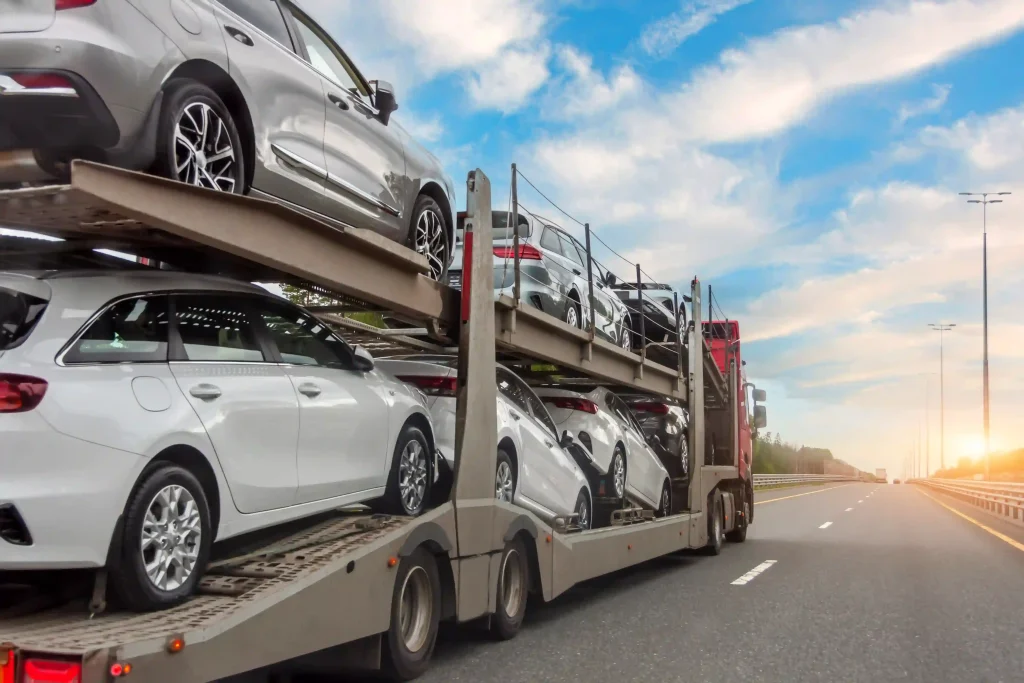
Weight is federally capped. No vehicle on the Interstate System may exceed 80,000 pounds gross — tractor, trailer, fuel, driver, and every car on board, combined. Carriers load right up against that ceiling. A few hundred pounds of belongings spread across several vehicles can push a truck overweight, and overweight violations bring real fines — often hundreds to thousands of dollars, and over $10,000 in some states for serious overages. If a DOT roadside inspection turns up prohibited or excess cargo, the driver can be required to offload it at your expense.
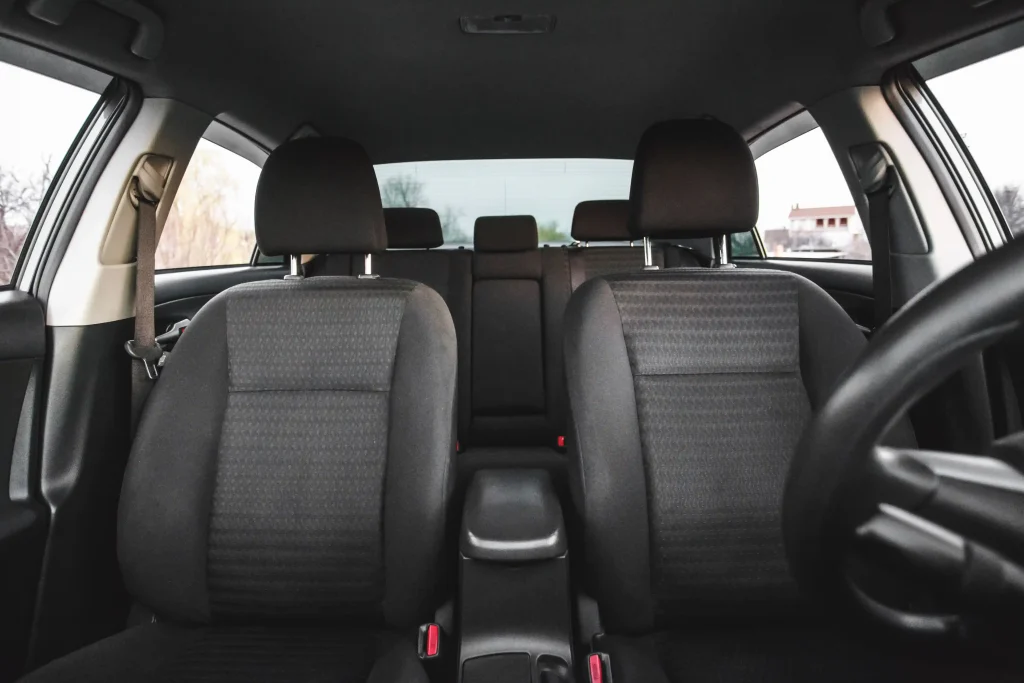
What You Can Legally Leave Inside When You Prepare Your Car for Shipping
Now the practical version, because “remove everything” has some nuance.
The unofficial 100-pound allowance. Most carriers will permit up to about 100 lbs of soft, non-fragile items in the trunk, packed below the window line and out of sight. Understand clearly what this is: an industry courtesy at the individual carrier’s discretion, not a legal right and not a guarantee. It is still uninsured. Always ask and get it confirmed before pickup — never assume.
Items that are flatly prohibited. These aren’t preferences; carrying them can trigger federal violations:
- Hazardous materials of any kind — gasoline, propane, compressed gas tanks, fuel canisters
- Flammables — paint, solvents, cleaning chemicals, aerosols
- Firearms and ammunition
- Fireworks and explosives
- Loose or high-voltage lithium batteries
- Perishable food and plants
- Illegal items of any kind
- Cash, jewelry, and irreplaceable documents (not illegal — just uninsured and unrecoverable)
Things you should personally remove that people forget: toll transponders and E-ZPass tags (they’ll rack up charges across every gantry the truck passes), parking passes and garage remotes, phone chargers and mounts, sunglasses, loose change, and the contents of the glovebox and center console. This adds up fastest on toll-heavy routes like New York to Florida car shipping on I-95.
Step 4: Handle Loose Exterior Parts
Anything that sticks out or can move needs attention before the car is loaded.
Retract or remove the antenna. Fold in the side mirrors. Remove bike racks, roof racks, cargo boxes, and ski racks. Secure or remove any custom spoilers, aftermarket lighting, or body kit pieces that aren’t factory-mounted. If you have a soft-top convertible, make sure it’s fully closed, latched, and in good condition — a top that leaks or lifts at highway speed is a problem on an open carrier.
Wind at 70 mph for 1,500 miles will find anything loose.
Step 5: Leave About a Quarter Tank of Fuel
A quarter tank — no more.
You need enough fuel for the car to be driven or winched on and off the trailer at both ends. You don’t want more, because fuel is heavy, roughly 6 pounds per gallon. A full tank on a sedan adds around 90 pounds, and multiplied across eight or nine vehicles that’s meaningful weight against the 80,000-pound federal limit.
Do a quick mechanical once-over.
Step 6: Check the Basics — Tires, Battery, Fluids
Check that the tires are properly inflated; underinflated or flat tires make loading difficult and can cause damage on the ramps. Make sure the battery is charged and secured in its bracket. Check for fluid leaks — an active leak can drip onto the vehicle parked below on a multi-level trailer, and carriers may refuse a badly leaking car.
If your vehicle has any mechanical quirks — a sticky ignition, a trick to getting it into neutral, a stubborn parking brake — write them down for the driver.

Step 7: Disable the Alarm
An alarm that goes off repeatedly in transit is a real headache — the driver may not be able to silence it, and on a multi-day haul it can drain the battery flat.
Disable the alarm entirely if you can. If it can’t be fully disabled, show the driver exactly how to shut it off and leave clear written instructions.
Step 8: Deal With Toll Tags and Registration
Remove your toll transponder — this one genuinely surprises people. Left in the windshield, an E-ZPass or SunPass will be read at every toll point the truck passes and bill you for a commercial truck crossing. That adds up fast across a cross-country route.
Also confirm the vehicle is currently registered and that you have the keys ready. You’ll hand the driver one working set — keep your spare. Never send both sets.
Step 9: Tell Us About Anything Unusual — Before Pickup
Accurate information is what gets the right truck sent to your door.
Tell your coordinator if the vehicle is lowered or has low ground clearance (it may need a lift gate or specific ramp angles), if it’s oversized — a dually, a lifted truck, a van — if it doesn’t run, roll, steer, or brake, or if it has aftermarket modifications that affect loading. Low-clearance, classic and high-value cars usually ship best with enclosed car shipping.
None of these are problems. They’re only problems when a carrier finds out on pickup day and doesn’t have the right equipment. That’s how you get a failed pickup and a re-dispatch fee. If your vehicle doesn’t run, our non-running vehicle transport service covers exactly that.
Step 10: Be Ready for the Inspection
Pickup day itself: be present, or have someone you trust there who can inspect and sign on your behalf.
You and the driver will walk the vehicle together and record every existing scratch, dent, and chip on the Bill of Lading. Read it before you sign. Make sure it actually reflects the car’s condition. Then take your copy and keep it — you’ll compare against it at delivery.
If you want the full picture of what happens next, we walked through it in how car shipping works, step by step. Once your car is on the truck, here’s what car shipping tracking updates you should get.

Prepare Your Car for Shipping: Quick Checklist
Use this list to prepare your car for shipping in one pass.
- Car washed, exterior clean
- Timestamped photos taken from every angle, plus odometer
- All personal items removed
- No hazardous materials, firearms, flammables, or perishables inside
- Toll transponder and parking passes removed
- Racks, loose accessories, and antenna removed or retracted
- Mirrors folded in
- Roughly ¼ tank of fuel
- Tires inflated, battery charged, leaks noted
- Alarm disabled or instructions provided
- One set of keys ready
- Coordinator informed of low clearance, size, or mechanical issues
- Available to inspect and sign the Bill of Lading
Where We Come In
We tell customers how to prepare your car for shipping up front — before booking, not on pickup day. Our coordinators ask about your vehicle’s condition, clearance, and modifications when we quote, so the carrier we assign shows up with the right equipment and the price we gave you doesn’t change.
We’ll also tell you honestly what a specific carrier will and won’t allow in the trunk, rather than letting you find out when the driver is standing in your driveway. Being straight about the details is the whole point — it’s the same reason we wrote about how to avoid car shipping scams.
You can verify our operating authority yourself through the FMCSA any time — MC 1784904, DOT 4509144.

The Bottom Line: Prepare Your Car for Shipping in 30 Minutes
Preparing your car for shipping is about thirty minutes of work that eliminates almost every problem that can happen on pickup day.
Not booked yet? See how much it costs to ship a car by distance.
Wash it, photograph it, empty it, leave a quarter tank, and tell us anything unusual about the vehicle. Do those five things and the rest is just logistics — which is our job, not yours.
Ready to Ship? Let’s Talk.
If you have questions about how to prepare your car for shipping or want a free quote, call us at (866) 923-8666 or visit crossautotransport.com. You can also get an instant estimate with our cost calculator.
We’re happy to walk you through it — that’s what we’re here for.
Sources:
- Types of Operating Authority | FMCSA
- What is a Household Goods Motor Carrier? | FMCSA CSA
- FMCSA Regulations and Enforcement of Interstate Moves
- 23 CFR 658.17 — Weight | eCFR
- Forbidden Materials | PHMSA — U.S. DOT
More car shipping tips on the Cross Auto Transport blog.


